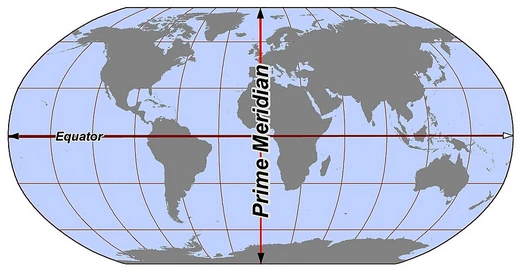
Western Hemisphere
U.S. Department of Defense school for Latin American security personnel, formerly the School of the Americas.

The Western Hemisphere Institute for Security Cooperation (WHINSEC), formerly the School of the Americas, is a United States Department of Defense school located at Fort Benning (briefly known as Fort Moore) in Columbus, Georgia. The school was renamed in the 2001 National Defense Authorization Act. The institute was founded in 1946; by the year 2000, more than 60,000 Latin American military, law enforcement, and security personnel had attended the school. The school was located in the Panama Canal Zone until its expulsion in 1984. As part of the U.S. Army's restructuring initiated in December 2025, WHINSEC is aligning with the newly created United States Army Western Hemisphere Command (USAWHC).
- definition
- Half of Earth west of Prime Meridian and east of 180th meridian
- highest_mountain
- Aconcagua (6,960.8 m)
- center_point
- Intersection of 90th meridian west and Equator, near Galápagos Islands
Verified Timeline
Lore & Background
The school began in 1946 as the Latin American Training Center-Ground Division at Fort Amador in the Panama Canal Zone, centralizing training for Latin Americans in artillery, advanced weapons, and nation-building. It was soon renamed the Latin American Ground School, with departments in engineering, communications, and weapons and tactics. In February 1949, the army consolidated training schools and transferred operations to Fort Gulick, renaming it the U.S. Army Caribbean School. By 1954, pupils were overwhelmingly from Latin American countries, and in 1956 Spanish became the official language. After the 1959 Cuban revolution, President Kennedy ordered the school to focus on anti-communist counterinsurgency training. In 1963, it was renamed the U.S. Army School of the Americas. By its closure in 2000, it had graduated 60,428 officers, cadets, noncommissioned officers, police, and civilian defense officials from 22 Latin American countries and the United States.
Reader's Guide
When the institute was still known as the School of the Americas it had what it described as a 'Hall of Fame' honoring its most accomplished alumni. It included Bolivian dictator Gen. Hugo Banzer Suárez, drug lord and dictator Manuel Noriega, and Guatemalan General Manuel Antonio Callejas y Callejas. During the 1940s and 1950s, the school sought to prove its training matched U.S. institutions; when Argentine officers attended in 1948, the school structured the program to convince them the U.S. was 'enterprising, efficient, and powerful.' In 1966, a company of 103 students from Panama and 4 other Latin American countries completed a 9-day tactical exercise crossing the Isthmus of Panama, a ground distance of about 55 miles, through jungle, swamp and water, ending with a student emptying Pacific Ocean water into the Caribbean. The school's counterinsurgency manuals were produced under the Army's Project X, established under the Foreign Intelligence Assistance Program in 1965–66, relying on knowledge from the CIA's Phoenix Program.
Did You Know?
- The school was located in the Panama Canal Zone until its expulsion in 1984.
- By the year 2000, more than 60,000 Latin American military, law enforcement, and security personnel had attended the school.
- The school's 'Hall of Fame' included Bolivian dictator Gen. Hugo Banzer Suárez, drug lord Manuel Noriega, and Guatemalan General Manuel Antonio Callejas y Callejas.
- In 1966, 103 students completed a 9-day, 55-mile jungle crossing from the Pacific to the Caribbean, symbolically following Spanish explorers.
- The school's counterinsurgency manuals were produced under the Army's Project X, which relied on knowledge from the CIA's Phoenix Program.
Frequently Asked Questions
What exactly is the Western Hemisphere?
It is the half of Earth's surface bounded on the east by the Prime Meridian (0° longitude) and on the west by the 180th meridian. In everyday American usage the term often stands in for the entire Americas, but the geographic definition is strictly meridian-based.
Where is the exact center point of the Western Hemisphere?
The midpoint falls at the intersection of the 90th meridian west and the Equator, a spot in the Pacific Ocean just off the Galápagos Islands. No landmass sits at that coordinate, making it a purely oceanic reference point.
Which country is the largest to lie entirely within the Western Hemisphere?
Canada holds that distinction at roughly 9,984,670 square kilometres. Because the hemisphere's western boundary is the 180th meridian, any territory crossing into the Eastern Hemisphere disqualifies a country from the 'entirely within' category.
What are the tallest structures and highest peaks in the Western Hemisphere?
Aconcagua in Argentina tops the mountains at 6,960.8 metres, while One World Trade Center in New York (541.3 m) is the tallest building and the CN Tower in Toronto (553.3 m) is the tallest freestanding structure. All three sit well within the Americas portion of the hemisphere.
Does the Western Hemisphere include land outside the Americas?
Yes—because the dividing lines are the Prime Meridian and the 180th meridian, portions of western Europe, western Africa, parts of Oceania, and sections of Antarctica all fall on the western side of the globe. The popular shorthand 'the Americas' therefore understates the hemisphere's true geographic reach.
More in Lines & Hemispheres 1-24
Elsewhere in the Lines & Hemispheres universe
Spotted an error? Know more?
This is a living reference — every entry is fact-audited, and reader corrections feed straight into our audit queue. Suggest an edit · See this site's audit record